Manual Choppers and Juicers: What Retail Buyers Should Check Before Ordering
A shopper picking up a manual kitchen tool usually wants an answer to one simple question: will this make my everyday task easier? Retail buyers can use the same question when choosing choppers and juicers. A clear purpose and a convincing sample demonstration are more useful than a long list of vague promises.
Choose the task before choosing the model
A chopper and a juicer do different jobs. Even products within the same category may work differently. Identify the food preparation task, the intended ingredients and the typical quantity before comparing models.
A tool suited to a small household task should not automatically be presented as equipment for continuous commercial use. Ask the supplier to confirm the intended use of the particular model. Avoid transferring performance claims from a similar looking product.
Build a comparison card for each sample
- Operation: Note whether the tool uses a pull cord, push mechanism, crank, lever or another action. Check how clearly the instructions explain it.
- Capacity: Separate the container's stated capacity from any recommended working quantity. Ask if a filling limit applies.
- Included parts: List the container, lid, attachments and accessories that actually come with the product.
- Handling: Review grip, stability and whether the user can assemble the tool as instructed.
- Cleaning access: Check which parts can be removed and the care method recommended for each component.
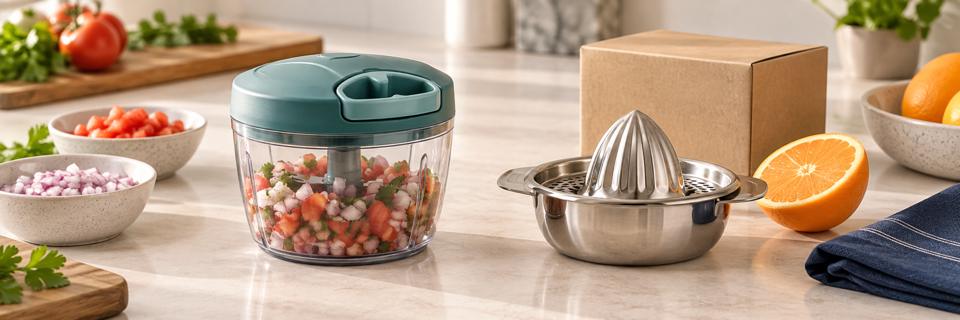
The Smoothy square push chopper 1000 ml provides one specific catalogue reference for a chopper enquiry. For juicers, browse the juicer range and ask about the operation and intended ingredients of your selected model.
Demonstrate the exact product you plan to sell
Follow the supplied instructions when assessing a sample. Keep notes on preparation steps, assembly and the result, using only ingredients the product is intended to handle. Confirm instructions for handling and storing sharp or moving components. Do not improvise a demonstration around unverified uses.
A short, accurate demonstration can also help your sales team explain the product. If a particular result depends on ingredient size or the amount loaded, include that detail rather than promising the same result in every situation.
Inspect the pack as carefully as the tool
Customers should be able to tell what the box contains. Check the product name, included attachments, instructions and any stated restrictions. A picture showing several tools should not leave the buyer unsure whether all of them are included.
For a wholesale order, confirm the sales unit, carton quantity, colour assortment and how loose components are secured. Ask how missing or damaged parts should be reported, and whether replacement parts are available. Do not promise replacements to your customers until those arrangements are confirmed.
Give similar products different roles
If you stock several models, explain the real differences through operation, capacity, included parts or packing. There is little benefit in adding near identical items unless each serves a clear customer need. Start with a focused selection and use customer questions and sales results to guide later orders.
Prepare your wholesale enquiry
Send your chosen references, planned quantities, sales channel and delivery location. Ask for samples, packing details and model specific instructions. If you are comparing sourcing options in India, use the same requirements for every supplier so the offers can be assessed fairly.
National Kitchenware's product catalogue can help you build that shortlist. Send a product enquiry with the choppers or juicers you want to discuss.
Email apexhomeneeds@gmail.com or call +91 90332 27748.