How Stainless Steel Became Part of the Everyday Kitchen
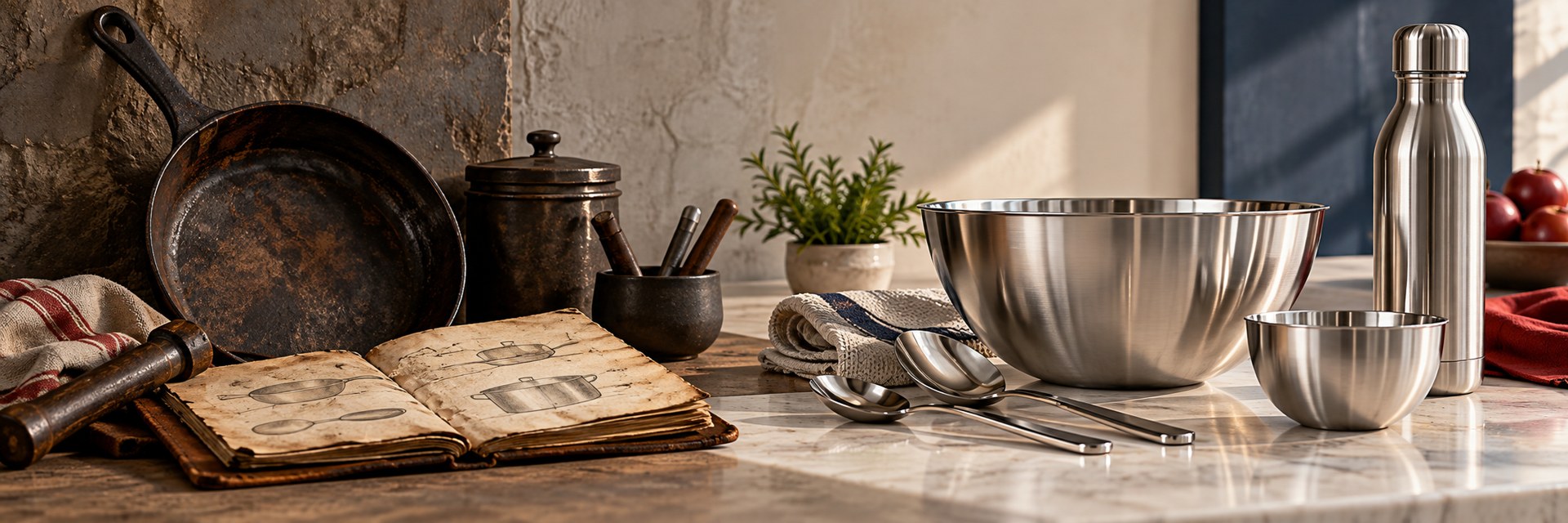
A steel spoon rarely asks for attention. It sits beside a plate, goes through another wash and returns to the drawer. Yet the material behind that ordinary routine has a history of experimentation, changing manufacturing methods and practical improvements in everyday kitchen tools.
It began with a problem: ordinary steel could corrode
Researchers in several countries explored how changing steel's composition affected its resistance to corrosion. The worldstainless history places the first patents and commercial manufacture of stainless steels in the early twentieth century. It was a period of development by several people, rather than a single idea appearing fully formed.
One well known milestone came in Sheffield in 1913, when Harry Brearley produced a chromium containing steel that showed useful corrosion resistance. The British Stainless Steel Association describes how its potential for cutlery became an important part of the story.
What makes stainless steel different?
Stainless steel is an alloy, not an ordinary steel item covered with a shiny protective coating. Chromium in the alloy helps form a thin protective surface layer. This is central to its resistance to corrosion.
There are different stainless steel grades, with different compositions and properties. That is why the words stainless steel do not, by themselves, answer every question about a kitchen product. Grade, thickness, construction and the intended use all matter.
Why the kitchen was a practical home for it
Kitchens need tools that can be handled repeatedly and cleaned after use. Stainless steel found applications in cutlery, sinks, food preparation equipment and household utensils. Its useful surface properties and the ability to make it into many shapes helped extend its role.
Think of the different jobs on a single table. A spoon needs a comfortable handle and smooth edges. A bottle needs a suitable closure and easy access for cleaning. A storage item needs the right shape for its contents. The material is one part of the design, not the whole explanation of how well the product works.
What today's buyer should ask
- Which grade is specified? Request the grade and supporting information when it matters to your buying requirements.
- How is the product constructed? A steel outer body does not establish the material of every component.
- How does it feel in use? Examine edges, joints, lids and handles on a sample.
- What care is recommended? Follow instructions for the particular product, especially where coatings, seals or other materials are present.
A glossy photograph cannot confirm all of these details. For a retail or hospitality order, keep the approved sample and the agreed specification together so the purchasing team knows exactly what it is reordering.
A useful distinction for bottle buyers
A stainless steel bottle is identified by its material. Temperature retention depends on its construction. A bottle should not be advertised as vacuum insulated simply because it looks metallic. Ask for the insulation type and any performance claims that are supported for the specific model.
The history of stainless steel is interesting because a technical development became familiar through everyday use. The same practical approach is useful when buying today: choose the product for the job, confirm its details and evaluate the actual sample.
Historical and material references: worldstainless history, British Stainless Steel Association and introduction to stainless steels.
Explore relevant products
Explore stainless steel bottles · Supreme dessert spoon set
Talk to National Kitchenware
Planning a cutlery or bottle range? Share the product type, quantity and material requirements so we can help you identify suitable catalogue options. Send a product enquiry.
Email apexhomeneeds@gmail.com or call +91 90332 27748.